Since the mobile phone entered our lives, concerns about its harmful effects have abounded. But what do we really know about the health risks of cell phones?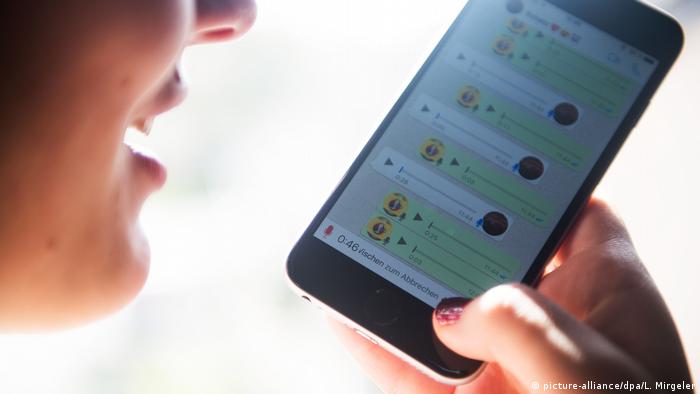
Experts recommend sending recorded messages instead of putting the phone near your head.
Studies of the science of the effects of smartphones are far from being solved. Brain cancer, nerve damage and various tumors have been touted as possible negative consequences of the regular use of mobile phones.
Although no solid evidence has been found to show that it is dangerous, this does not mean there is no cause for concern.
What about radiation?
A large part of the concern about the health and safety risks of mobile phones is focused on the radiation they emit. Mobile phones release radio frequency energy or radio waves that can be absorbed by body tissues. In the past, studies have linked the excessive use of mobile phones with certain brain tumors.
According to Martin Röösli, head of the Exposure and Environmental Health Unit of the Swiss Institute of Tropical Health and Public Health, the type of radiation emitted by a mobile phone is not cause for alarm. It is a radiofrequency radiation of very low energy, the same as that found in television and radio signals. “It’s non-ionizing radiation, so it’s not radioactive or radiographic,” Röösli told DW. “No direct damage to DNA can occur with this type of radiation, it is impossible,” he added.
As for the link between this type of radiation and cancer, Röösli says he “does not see these relationships.” Often these studies are “retrospective” and are based on the excessive use made by people with tumors in the cell’s past, “Röösli told DW.
“We have not seen an increase in cancer rates in the last two decades, which would certainly be expected if there was a significant risk in the use of mobile phones,” he added.
In the same way, Frank de Vocht, a reader of Epidemiology and Public Health at the University of Bristol, told DW that the dangers of cell phones are unlikely to have gone unnoticed. “If the use of mobile phones increased the risk of something significantly like cancer, this would have been picked up much more clearly with the scientific methods we have now, as, for example, the risks involved in smoking tobacco in lung cancer are simple data of collect”.
There is more to know
This does not mean that mobile phone radiation has no effect on the brain at all. Previous research found evidence that can change our brain waves. And now, a new study co-authored by Röösli has found a link between the use of the mobile phone and the adverse effects on the memory retention of young people.
The Swiss researchers studied 700 adolescents between 12 and 17 years old; They followed their phone habits in addition to completing memory tests. Over the course of a year, participants had to complete a questionnaire about their mobile phone habits, as well as answer questions about their physical and psychological health.
Then they completed a series of computerized cognitive tests. Röösli said that a unique feature of the study was the use of data mobile phone operators. That meant that for each call made by the participants, the researchers “knew in what network it took place and how long it lasted”.
The study, published in Environmental Health Perspectives, found that a year of exposure to mobile phone radiation could have a negative effect on the development of memory performance in specific brain regions in adolescents. Whereas ‘exposure’ refers almost exclusively to telephone calls.
“80 percent of the radiation absorbed comes from holding the phone to your head,” Röösli said. Interestingly, they discovered that the brain’s memory function was more vulnerable to the negative impact of radiation when the phone was attached to the right side of the head. That’s where the brain areas related to memory are located.
“Basically, what we saw was that the greater the absorption of radiation (by the brain), the more likely it was that the development of memory in one year was not as good as that of those who did not absorb so much radiation,” said Röösli to DW. The researchers also emphasized that more research is needed to rule out other factors, including puberty, that could affect cell phone use and cognition.
As for other uses of smartphones (sending text messages, taking photos, using applications), this involved “almost no exposure (to radiation) in the brain.”
Should we change our behavior?
Despite the negative effects they noticed, Röösli described them as “very subtle”. But if he is worried, the scientist points out that the effect of radiation “can be easily minimized” by taking calls on the left side of the head, or using a speaker or headphones, “especially when the quality of the network is low”.
“This study shows that, although there is probably an effect, it is relatively small,” De Vocht told DW. “In my opinion, the most important lesson of all these studies is that the use of mobile phones is not extremely dangerous, despite what some people may say.”
However, what worries Röösli and De Vocht are not the possible biological effects of mobile phone use, but the behavioral changes observed in mobile phone users. According to them, any perceptible impact of mobile phone radiation is much less relevant than those that change the way people behave.
“There is convincing evidence that what resembles an ‘addiction to mobile phones’ negatively affects social interaction, mental health and well-being,” De Vocht said.
In 2015, Röösli co-authored a study that found that teenagers who use their phones a lot, especially after “turning off the lights”, have interrupted sleep patterns and are “much more tired”. It is this type of research that is believed to be “much more relevant from a public health perspective” when considering the health risks of mobile phone use.
“That has nothing to do with radiation, it’s about behavior.” Ultimately, Röösli said that if radiation is having an effect on mobile phone users, “it’s not the most important thing, at least at this point.”
The post Can cell phone use damage the brain? appeared first on Rava.
from Rava https://ift.tt/2MNUxte
0 comments:
Post a Comment